David Shin, PhD, a graduate of the Seventh-day Adventist Theological Seminary at Andrews University, Berrien Springs, Michigan, and the former President of Ouachita Hills College in Arkansas is currently a Professor of Religion at Weimar University in California. He has also pastored in Lansing, Michigan, and Anchorage, Alaska. His love for sharing the gospel is shown through his practical insights into biblical beliefs and principles through his practical insights that are essential for the times in which we live.
OVERVIEW
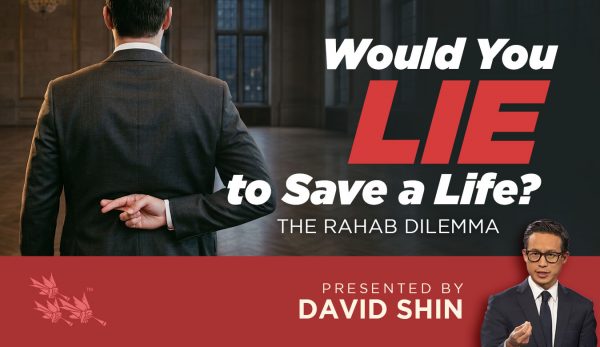
This sermon explores one of Scripture’s most challenging ethical questions: Is it ever right to lie to save a life? Through the stories of Rahab, Daniel, and Shadrach, Meshach, and Abednego, it presents a compelling call to unwavering obedience, daily spiritual discipline, and complete trust in God’s sovereignty—reminding believers to choose what is right and leave the consequences in His hands.
David Shin, PhD, a graduate of the Seventh-day Adventist Theological Seminary at Andrews University, Berrien Springs, Michigan, and the former President of Ouachita Hills College in Arkansas is currently a Professor of Religion at Weimar University in California. He has also pastored in Lansing, Michigan, and Anchorage, Alaska. His love for sharing the gospel is shown through his practical insights into biblical beliefs and principles through his practical insights that are essential for the times in which we live.
SERIES INFO
KEY INSIGHTS
💡 The tension between scriptural commands on lying and saving life embodies a complex ethical dilemma: The Bible contains explicit prohibitions against falsehood (e.g., Exodus 20:16, Proverbs 12:22), yet Rahab’s story (Joshua 2; Hebrews 11:31; James 2:25) complicates a simplistic condemnation. This duality forces readers to wrestle with morality in life-threatening scenarios. It is important to recognize that biblical narratives often are descriptive rather than prescriptive and may highlight human imperfection as much as divine ideal. Rahab’s lie, praised for her faith rather than her deception, underscores this nuance.
💡 Ethical hierarchialism offers a tempting but flawed solution: This ethical framework places commands in a ranked order, allowing the higher good (preserving life) to override lesser commands (like truth-telling). While popular among some Christian ethicists, the video refutes its effectiveness by demonstrating that life preservation alone does not justify compromising God’s commandments. The story of Shadrach, Meshach, and Abednego (Daniel 3) is pivotal, illustrating faithfulness to God’s law without equivocation or pragmatic loopholes, even at the cost of death.
💡 Principled ethics rooted in unwavering obedience is reinforced by end-time biblical narratives: Daniel 3 and 6 depict faithful individuals who refuse to bend God’s commandments despite immense social and physical pressure, reinforcing the idea that in the eschatological context, ethical compromise leads to spiritual peril. The refusal of moral shortcuts underscores the tension between divine law and worldly survival instincts and reaffirms that ultimate loyalty belongs to God.
💡 Faith and trust in divine sovereignty underpin ethical decision-making: The video asserts that believers must trust God to handle consequences rather than preemptively justify disobedience. The statement, “We should choose the right because it is right and leave the consequences with God,” encapsulates this ethic, encouraging reliance on divine intervention as demonstrated in both biblical and historical accounts (e.g., the Nazi persecution story mentioned).
💡 Consistency in private spiritual disciplines cultivates the courage to stand in public trials: Daniel’s commitment to prayer three times daily for over seventy years exemplifies the sustaining power of routine, ritual, and order amid chaos. Psychological insights into pregame rituals, such as those of athlete Rafael Nadal, explain that rituals help manage anxiety and mental “chatter,” providing internal stability. Likewise, spiritual routines prepare believers psychologically and spiritually to face public challenges with integrity.
💡 Managing modern distractions is crucial for spiritual readiness: The recommendation to remove or limit access to phones and digital devices before bed illustrates a practical approach to maintain focus on spiritual priorities. With perpetual distractions threatening to erode time for prayer and meditation, believers must make intentional choices to protect and nurture their relationship with God to withstand end-time pressures.
💡 Biblical ethics assumes God exists and intervenes in history, contrasting secular ethical systems: The speaker emphasizes that true biblical ethics function in a theistic worldview where God actively influences events. This contrasts with some Christian ethical positions that deny God’s active involvement outside extraordinary moments. Trusting in God’s intervention is foundational to end-time ethics—believers act with conviction because they are confident that God’s power is present and operative.
DATE ADDED: June 23, 2026TOPICS:
HealthSKU: DS-176L



 0
0
